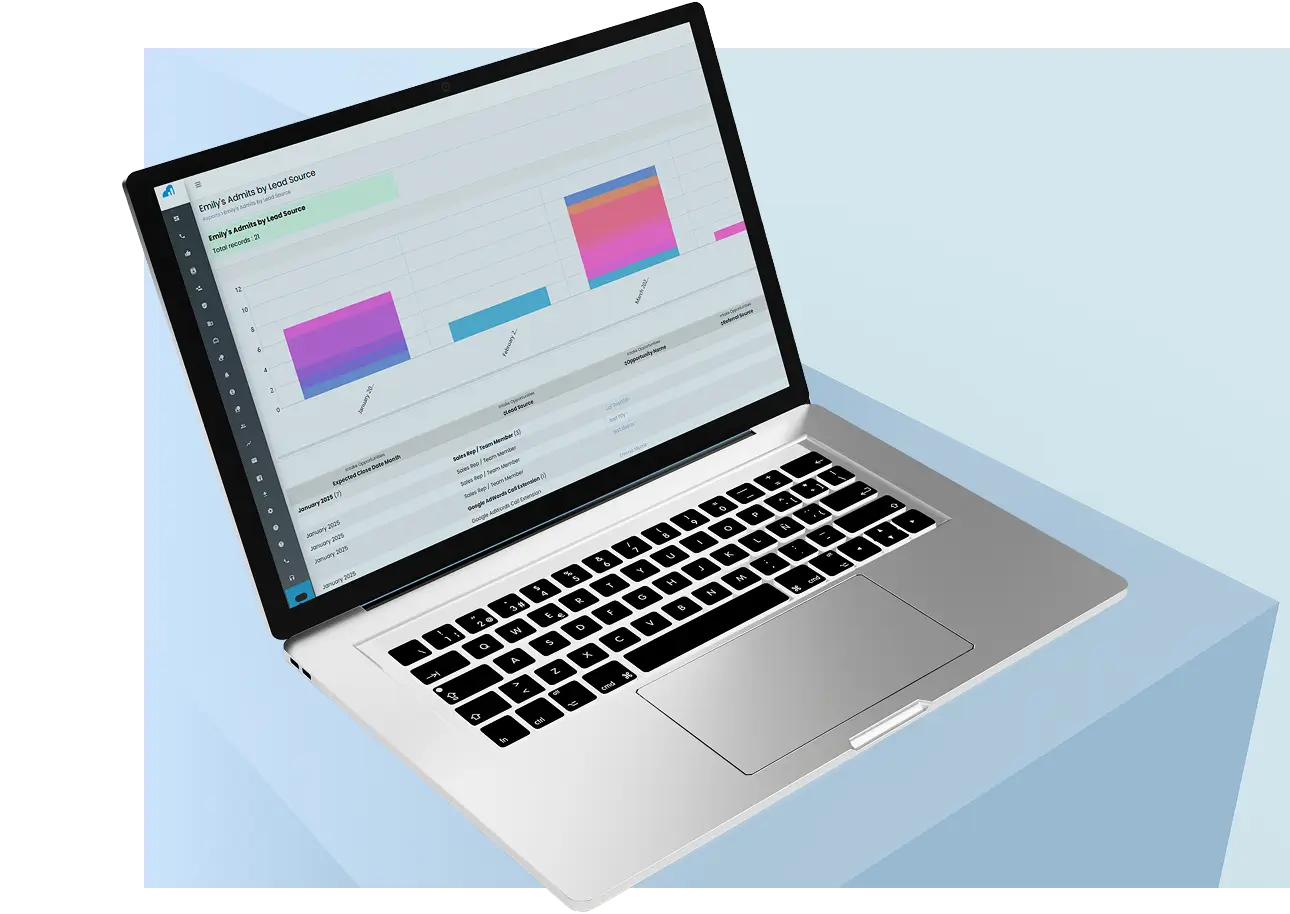


Marketing automation for behavioral health should do two jobs at once: scale the outreach a lean team can’t keep up with by hand, and connect to core operational systems that can show the revenue it produces. Both matter more every year, because behavioral health has the most expensive patient acquisition in healthcare and the tightest scrutiny on what that spend returns. This article covers why the old measurement hides your real ROI, and what a marketing automation setup built for addiction and mental health treatment looks like.
Why is Marketing So Expensive in Behavioral Health?
The economics squeeze from both sides. Sam Hessler, VP of Sales at Dazos, noted there are 23,000 to 24,000 addiction treatment facilities in the country, a number expected to reach 35,000 by 2035, so the field is crowded and growing. On the other hand, a single admission can lead to $30,000 to six figures in reimbursement, which makes programs willing to pay $80 to $100 per click and $1,000 to $3,000 for a qualified verification of benefits. Cost per admission commonly runs $5,000 to $10,000 and keeps climbing, with cost-per-lead increases above 50 percent in some markets. The paid channel is also gated by LegitScript certification and Google’s health policy, so one compliance misstep can cut off advertising overnight.
Why Does Cost Per Lead Hide Your Real Marketing ROI?
A claim that never collects still shows up as a win in the report and a loss in the bank. Cost per admission tells you what you paid to get someone to choose you for treatment. ROI on collected revenue tells you whether the campaign is targeting the people who are the best fit for your program. Most programs track cost per lead against nothing downstream, and roughly a quarter of organizations cannot say which channels drive their results. Measuring ROI is now one of the most-cited marketing challenges in the field. The shift that fixes it runs from cost per lead, to cost per admission, to collected revenue by campaign, so credit lands on the channels that produced admissions that paid.
Why Does Marketing Automation Need to Run on Your CRM?
Because the CRM already holds the live record and the triggers. Johnny Lin, a Customer Success Manager at Dazos, described the CRM as the single source of truth: discharge dates, levels of care, lead stages, and the updates your team and integrations make all day. When those events fire the automations, follow-up stops depending on someone remembering to do it. Sam Hessler added that a disconnected stack forces staff to re-enter the 75 to 150 data points collected for each treatment opportunity across separate systems, which is a large and avoidable time drain. On a connected platform, a website lead flows into the record, the insurance verification stays with it, the data pushes to the EMR at admission, and every message is logged back to the patient record.
How Do You Scale Outreach Across Alumni, Referrals, and Families?
Patients come from digital marketing, business development, and alumni, and the strongest programs address all three. Volume is what breaks the manual approach. At 30 admissions a month, a program has about 360 alumni after one year and roughly 1,000 by year three. Even after readmissions, staying in touch with 800 people by hand is a full-time job. Automation carries that load: post-discharge check-ins and milestones triggered off the discharge date, a nurture cadence for referral partners who went quiet, the second touchpoint to a family that never happened, and a faster response to inquiries that would otherwise go cold. Johnny Lin framed the goal as doing the same work with less effort.
What Does Behavioral Health Specific Automation Include?
The difference from a generic tool is that the work is already done for this field. That means templates written for behavioral health common milestones and touchpoints, segments built on CRM data like level of care and discharge date that update themselves, workflows that fire off real events, and social media management from one composer across accounts. It also means analytics that report spend to admissions to revenue with cost per admission by channel, and compliance built in: HIPAA and CFR 42 Part 2, verified sending domains, CAN-SPAM handling, role-based permissions, a full message log, and A2P 10DLC for SMS. Sam Hessler pointed out that AI helps here too, drafting and adjusting content so a team that doesn’t have a copywriter can still send well-written messages.
What Results Are Operators Seeing?
Sam Hessler shared a program called PUR Health in Vero Beach, where the team had spent 5 to 10 hours a week manually following up with alumni and former patients. After a four-to-six-week onboarding, they reclaimed that time and improved alumni readmission rates by 25%, with no full-time hire. Teams commonly get 5 to 10 hours a week back once the workflows automate the follow-up. As one operator put it, “We are not taking shots in the dark, and we are no longer scared about the marketing budget growing.” In a market where margins keep tightening, that kind of incremental gain can decide whether a program stays even or grows.
Where to Start
Start by connecting the number you spend to the revenue you collect. Map your channels to admissions and to collected revenue, and let the gaps show you where to automate first, usually alumni and referral follow-up. See the full session and live walkthrough on the Show Me the Collected Revenue on-demand page, then book a marketing attribution review with the Dazos team to see your own spend mapped to collected revenue.