
Behavioral health organizations invest significant time and resources into attracting new patients.
But what happens after someone reaches out? If admissions inquiries go unanswered, follow-up is delayed, or prospective patients disengage before treatment begins, valuable opportunities can be lost.
Identifying and recovering those missed opportunities before they become lost admissions could be the difference in a profitable year vs. a loss.
With Dazos AI Agents, behavioral health organizations can strengthen their admissions process, improve patient engagement, and increase revenue, all while helping more people access the care they need.
How to Find the Biggest Gaps?
Finding and addressing gaps that prevent prospective patients from completing the admissions journey is critical to long term efficiency.
For behavioral health providers, these gaps can occur at nearly every stage of the patient experience, including:
- Missed or unanswered admissions calls
- Website inquiries that don’t receive timely follow-up
- Insurance verification delays
- Prospective patients who stop responding during admissions
- Referral opportunities that aren’t consistently tracked
- Former patients who could benefit from continued engagement
Every missed connection represents more than lost revenue. It may also mean someone doesn’t receive addiction or mental health treatment when they need it most.
Revenue recovery becomes much easier when organizations have access to real-time operational insights.
Where Behavioral Health Organizations Commonly Lose Revenue
Even experienced admissions teams can struggle to keep pace with growing patient demand. As inquiry volume increases, it’s easy for opportunities to fall through the cracks.
Some of the most common sources of lost revenue for behavioral health facilities include:
Missed Admissions Calls
Many prospective patients call during moments of crisis. If they reach voicemail or don’t receive a prompt return call, they may contact another treatment provider instead.
Delayed Lead Follow-Up
Research consistently shows that responding quickly improves conversion rates. Delayed follow-up gives prospective patients more time to lose interest, seek treatment elsewhere, or decide not to pursue care at all.
Incomplete Admissions
Some individuals begin the admissions process but never finish it.
Whether they encounter insurance questions, scheduling concerns, or uncertainty about treatment, these unfinished conversations often represent recoverable opportunities.
Limited Visibility Into the Admissions Pipeline
Without clear reporting, it’s difficult to know where prospective patients are dropping out of the process.
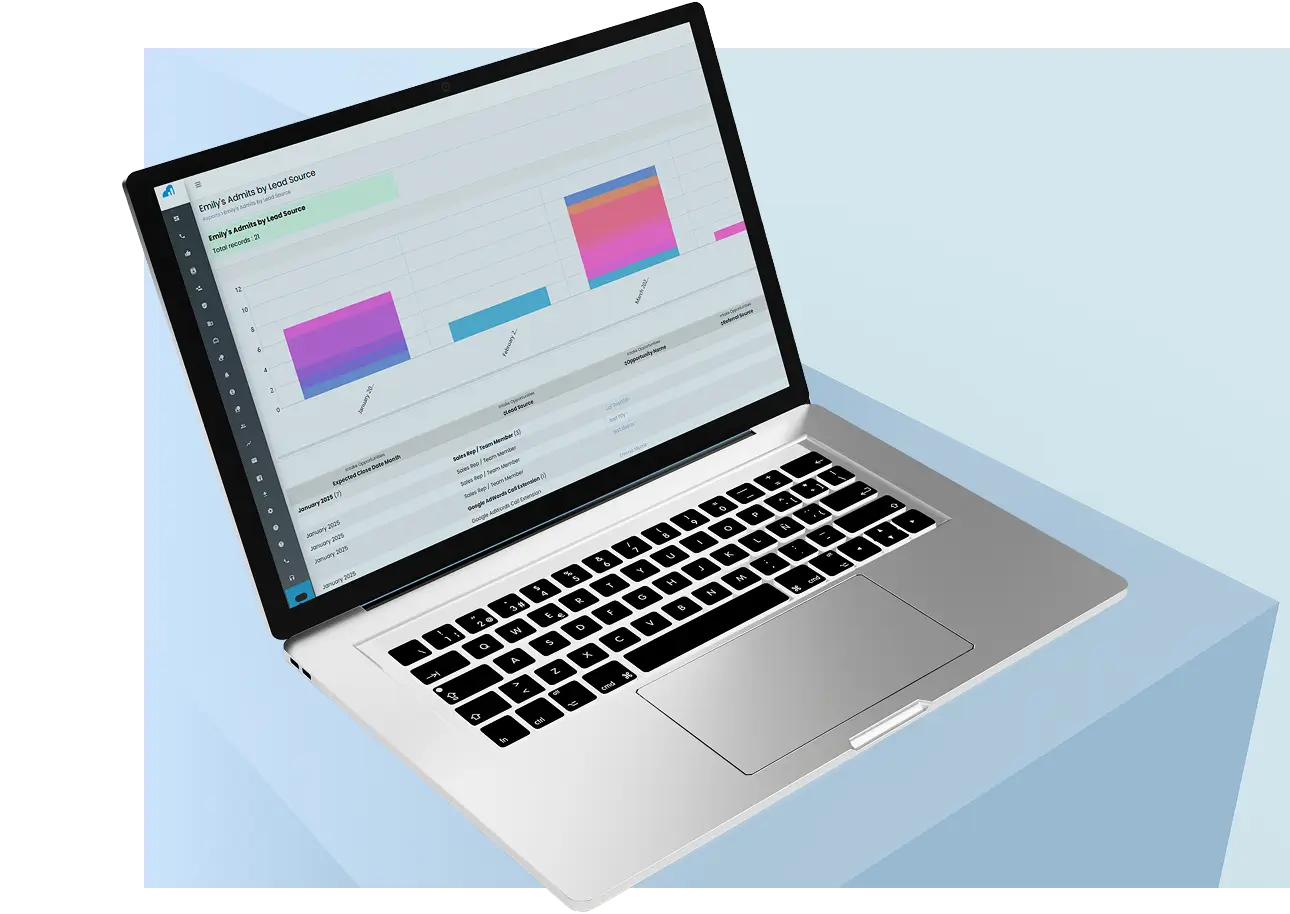
AI powered dashboards give behavioral health leaders greater visibility into their admissions pipeline, making it easier to identify trends and recover missed opportunities.
How AI Supports Revenue Recovery in Behavioral Healthcare
Artificial intelligence built for behavioral health helps organizations uncover patterns that are difficult to identify manually while giving admissions teams more time to focus on people instead of paperwork.
Rather than replacing staff, AI supports them by helping ensure fewer opportunities are missed.
For example, AI can:
- Identify leads that haven’t received follow-up
- Flag prospective patients who may be at risk of disengaging
- Automate personalized follow-up communications
- Call back leads that have gone cold consistently over time
- Surface trends within the admissions pipeline
- Help prioritize high-intent inquiries
- Generate operational insights that improve admissions performance
With routine administrative tasks handled more efficiently, admissions staff can spend more time building relationships with prospective patients and their families.
How Dazos Helps Behavioral Health Organizations Recover Revenue
The Dazos platform is designed to help behavioral health organizations uncover missed opportunities throughout the admissions journey while giving leadership greater visibility into operational performance.
Instead of relying on manual reports or disconnected systems, Dazos brings together the data admissions teams need to make faster, more informed decisions.
With Dazos, behavioral health organizations can:
- Identify where prospective patients are dropping out of the admissions process
- Track admissions performance with real-time dashboards and reporting
- Reveal missed follow-up opportunities before leads are lost
- Automate routine workflows that improve speed and consistency
- Monitor operational trends that impact admissions, occupancy, and revenue
- Give leadership actionable insights to improve efficiency across the organization
Rather than replacing your admissions team, Dazos equips them with better information and intelligent automation. That way, they spend less time on administrative tasks and more time connecting prospective patients with care.
Admissions Efficiency Benefits Patients and Providers
These concepts aren’t simply about increasing admissions numbers; it’s about creating a stronger, more responsive organization.
When treatment centers understand where opportunities are being lost, they can improve admissions workflows, respond to prospective patients more quickly, and lower the amount of preventable revenue loss.
The result is a better experience for everyone involved.
Patients receive faster support during critical moments, admissions teams work more efficiently, leadership gains greater operational visibility, and organizations are able to help more people access treatment while improving their long-term financial performance.
Technology alone doesn’t improve admissions. People do. But when experienced admissions teams have the right insights at the right time, they can help more patients access care while supporting the long-term success of the organization.
Ready to Strengthen Your Admissions Process?
Every missed inquiry represents an opportunity to help someone in need while supporting your organization’s long-term growth.
With the right technology, behavioral health providers can improve admissions workflows, recover missed opportunities, and make more informed operational decisions.
Learn how Dazos helps behavioral health organizations streamline admissions, recover revenue, and turn operational data into actionable insights. Contact our team today to schedule a demo.
Sources
- Office of the National Coordinator for Health Information Technology. (2026, March 31). Behavioral health. HealthIT.gov. Retrieved from: https://healthit.gov/behavioral-health/. Accessed on August 14, 2026.
- Substance Abuse and Mental Health Services Administration. (2026, February 4). Advancing the future of behavioral health data exchange. Retrieved from: https://www.samhsa.gov/blog/advancing-future-behavioral-health-data-exchange. Accessed on August 14, 2026.
- Reif, S., et al. (2017). Reducing behavioral inpatient readmissions for people with substance use disorders: Do follow-up services matter? Psychiatric Services. PubMed Central. Retrieved from: https://pmc.ncbi.nlm.nih.gov/articles/PMC5895963/. Accessed on August 14, 2026.