
Behavioral health marketing depends on relationships. Your organization may need to stay connected with prospective clients, alumni, referral partners, families, and community providers, often at the same time.
Marketing automation can make that communication more manageable. But the best marketing automation for behavioral health should do more than schedule emails.
It should use real behavioral health data to personalize outreach, automate repetitive work, and help your team understand which efforts contribute to admissions and revenue.
What Is Behavioral Health Marketing Automation?
Behavioral health marketing automation uses technology to manage repetitive outreach and communication based on predefined workflows, audience segments, or events.
For example, an organization might automatically send alumni check-ins after discharge, follow up with prospective clients, or provide referral partners with program updates.
The goal isn’t to replace personal communication, but to automate routine touchpoints so your team has more time for conversations that need a human connection.
What Should the Best Behavioral Health Marketing Automation Software Include?
Marketing platforms vary considerably in what they automate and how they use your data. For behavioral health organizations, several capabilities are particularly valuable.
1. Behavioral Health-Specific Workflows and Templates
Generic marketing templates aren’t always appropriate for behavioral healthcare.
Look for a platform that understands the audiences your organization communicates with and the relationships you’re trying to maintain.
Behavioral health-specific templates can support outreach such as alumni check-ins, recovery anniversaries, event invitations, and referral partner updates without requiring your team to build every campaign from scratch.
2. Email, SMS, and Social Media Management
Your audience doesn’t communicate through one channel, so your marketing platform shouldn’t limit you to one either.
Managing email, text messaging, and social media together can reduce the number of disconnected tools your team needs.
Dazos iCampaign brings email, SMS, and social media management into one platform. Teams can write, design, schedule, and publish social content alongside other campaigns rather than moving between separate systems.
3. Segmentation Using Live CRM Data
Good automation depends on knowing who you’re talking to.
Static lists can quickly become outdated. CRM-connected marketing automation can instead create audiences using current information already available in your system.
That might include discharge date, level of care, referral source, substance type, or another relevant data point.
When the underlying CRM data changes, your audience can change with it. That makes it easier to deliver communication based on someone’s actual relationship with your organization instead of manually maintaining lists.
4. Automated Lifecycle Outreach
Behavioral health relationships can continue long after someone’s first interaction with your organization.
Marketing automation can create structured communication throughout that lifecycle, including prospective client follow-up, alumni outreach, milestone messages, referral partner communication, and re-engagement campaigns.
Instead of relying on staff to remember every follow-up, workflows can trigger communication based on events or information already recorded in the CRM.
The result is more consistent outreach without requiring someone to manually manage every touchpoint.
5. HIPAA-Compliant Communication
Behavioral health organizations handle highly sensitive information, so compliance and security should be central considerations when evaluating marketing technology.
Ask potential vendors how information is protected, what security controls are available, and how their communication tools support HIPAA compliance.
Dazos iCampaign is designed for HIPAA-compliant communication with encrypted, secure messaging built into the platform.
6. Marketing Attribution Beyond Opens and Clicks
Open rates and click-through rates can help measure engagement. They don’t tell you whether marketing ultimately contributed to an admission or generated revenue.
Behavioral health organizations should look for marketing technology capable of connecting campaigns with outcomes further down the funnel.
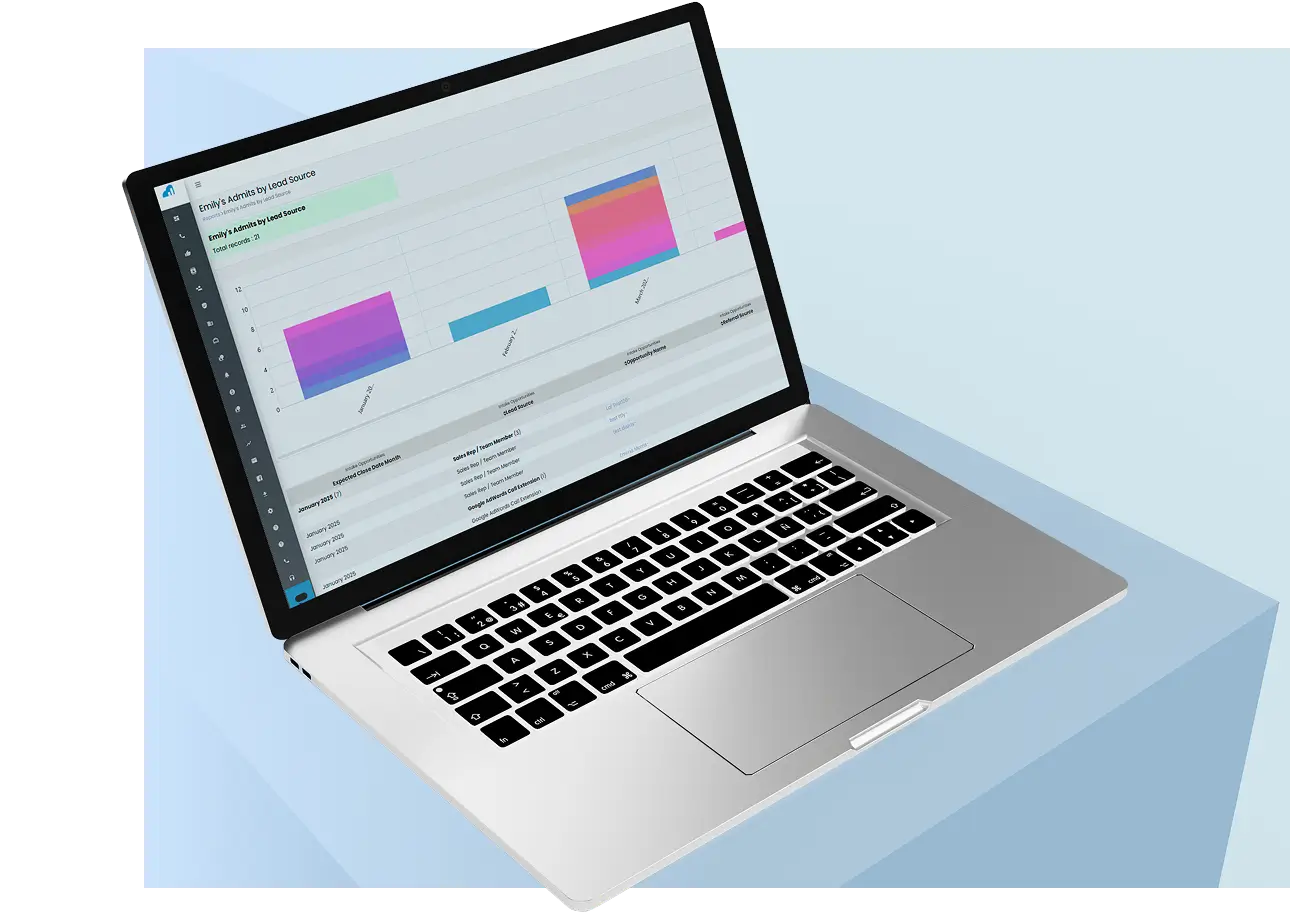
When marketing automation is connected to admissions, CRM, and billing data, teams can better understand which campaigns and referral sources produce admissions and collected revenue.
That information makes it easier to prioritize successful strategies and defend marketing investments with business results rather than surface-level engagement metrics.
7. Automation That Gives Your Team Time Back
Marketing automation should reduce work, not create another platform your staff has to constantly manage.
Consider how much manual work a platform can eliminate. Can audiences update automatically? Can workflows trigger without staff intervention? Can your team manage multiple communication channels without moving between several tools?
Dazos reports that teams can reclaim approximately 5–10 hours per week by automating outreach workflows.
PUR Health also experienced a 25% increase in alumni returning to care when needed through automated lifecycle outreach.
Generic vs. Behavioral Health Marketing Automation
General marketing automation platforms can provide powerful tools for email campaigns, audience segmentation, social media, and analytics.
But behavioral health organizations have additional considerations.
Your team may need to manage alumni engagement, referral relationships, prospective client communication, HIPAA requirements, admissions data, and long patient journeys.
A behavioral health-specific platform can connect those activities to the systems and data your organization already uses instead of requiring your team to adapt generic marketing workflows around them.
Why Dazos iCampaign Is Built for Behavioral Health Marketing
Dazos iCampaign was designed specifically for behavioral health organizations.
The platform supports email, SMS, and social media while using data already available within Dazos CRM. Teams can create audience segments using live CRM conditions and automate communication based on real events throughout the client lifecycle.
Pre-built behavioral health templates make it easier to launch campaigns for alumni, referral partners, and other audiences. Social media tools allow teams to create, schedule, and publish content without leaving iCampaign.
Most importantly, marketing doesn’t operate separately from the rest of the organization.
Because iCampaign works within the broader Dazos platform, teams can connect outreach with admissions and revenue data to better understand what their marketing actually produces.
Questions to Ask When Choosing Behavioral Health Marketing Automation
Before selecting a platform, consider:
- Was it designed for behavioral health organizations?
- Does it connect directly with your CRM?
- Can audiences update automatically using live data?
- Does it support email, SMS, and social media?
- Can it automate alumni and referral partner outreach?
- How does it protect sensitive information?
- Can campaigns be connected to admissions and revenue?
- How much manual work is required to maintain workflows?
- Can your existing team manage the platform easily?
The best marketing automation software should make consistent outreach easier while giving your team clearer insight into what actually works.
See Dazos iCampaign in Action
Dazos iCampaign brings behavioral health marketing automation, CRM data, email, SMS, social media, segmentation, and performance insights together in one connected platform.
Book a demo to see how Dazos can help your organization automate outreach, strengthen relationships, and connect marketing activity to meaningful business outcomes.
Sources
- U.S. Department of Health & Human Services. Covered Entities and Business Associates. Retrieved from: https://www.hhs.gov/hipaa/for-professionals/covered-entities/index.html. Accessed on November 17, 2026.
- U.S. Department of Health & Human Services. Marketing. Retrieved from:
https://www.hhs.gov/hipaa/for-professionals/privacy/guidance/marketing/index.html. Accessed on November 17, 2026.