
December is one of the most important months of the year for behavioral health leaders. While the holidays often slow admissions down, it’s the perfect time to look closely at your data and prepare for the new fiscal year.
A strong year-end audit helps behavioral health providers understand what is working, where systems need support, and how to plan for growth in the months ahead.
This type of review is not only helpful for operations. It also supports better mental health services, stronger health outcomes, and improved cash flow for your organization.
Whether you run outpatient services, inpatient programs, residential treatment, or community-based health services, these metrics help you enter January fully prepared.
Below are six metrics every leader should review before the year ends and why they matter for behavioral health care.
By reviewing the six key areas below before the New Year, providers can make smarter decisions, improve daily operations, and enter January with a clear plan for growth.
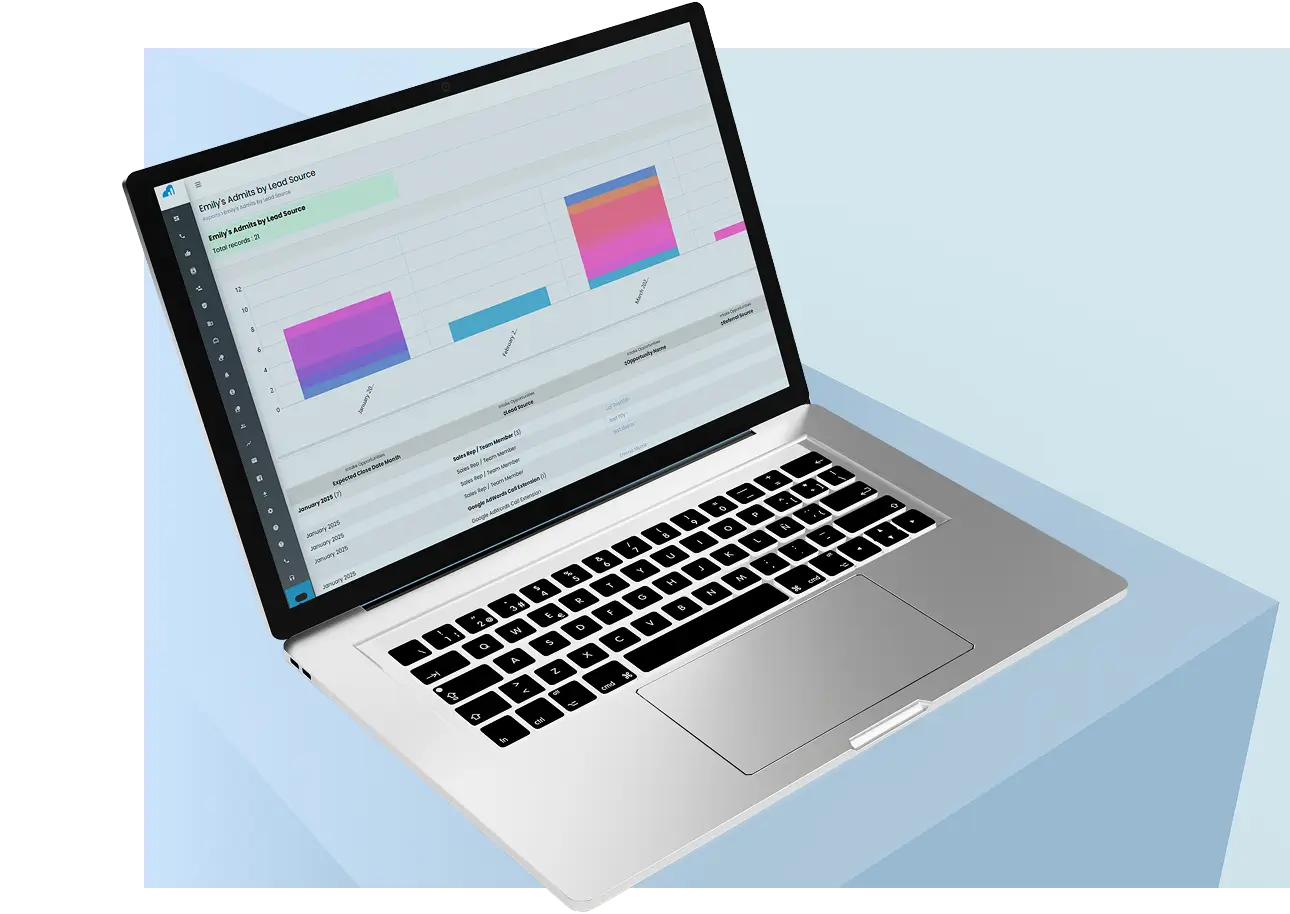
Understanding how people reach your organization is one of the most important parts of your year-end audit.
Referrals, outreach, website visits, and outpatient inquiries show how well your programs are connecting to the community. They also help predict what the spring surge in behavioral health may look like.
Review lead and referral trends by:
These patterns help your providers plan staffing, improve outreach, and adjust their treatment programs to meet client health needs more effectively.
December is a good time to review how many inquiries turned into admissions across your health system or treatment center. Even a small improvement in conversion can make a major difference in the new year.
Behavioral health leaders should review:
This data matters across behavioral health services, mental health, and substance abuse treatment. A strong admissions process helps both clients and staff, and it prepares your team for high-volume months.
A clear audit also supports reporting needs for payors, managed care, Medicare, Medicaid services, and state department of health agencies.
Your financial statements and cost report are two of the most important parts of your year-end review.
These documents help leaders understand expenditures, total expenses, and how your organization performed across the fiscal year.
In behavioral health care, this financial data supports:
Reviewing cash flow, billing delays, and payer trends helps make sure your team is ready for January changes from insurance plans and other requirements.
This also supports non-profit organizations and community-based clinics that rely on grants and public funding.
Dazos’s IQ helps treatment centers track every claim, uncover missed revenue, and hold billing partners accountable, giving teams the financial clarity they need to plan for the year ahead.
The end-of-year period is one of the best times for behavioral health leaders to evaluate their marketing efforts.
Understanding which channels drove the strongest inquiries, and which offered the best return on investment, helps marketing teams plan smarter strategies for the next fiscal year.
During your audit, take a closer look at:
These marketing insights help the entire organization. Leaders can make better decisions about budget allocation, adjust messaging for the new year, and build campaigns that support higher admissions during busy seasons.
Dazos’ marketing reports make these trends easier to track across behavioral health programs and locations.
A strong audit also looks at the performance of your health services, including both mental health services and substance abuse treatment. Understanding program trends helps leaders improve care and plan resources for the future.
Behavioral health leaders should review:
These insights help you improve care delivery, plan new initiatives, or strengthen existing services. They also provide clear data for reporting to stakeholders, boards, and community funders.
Before January, it’s critical to ensure your organization is prepared for audit requirements, including those related to:
A clean review now saves time and reduces stress in the spring, when audit deadlines are closer.
This work also supports better coordination with health care providers, partner organizations, and community mental health programs.
Alumni engagement is becoming an important metric for many behavioral health leaders. It shows how well former clients stay connected to your organization. Alumni involvement also reflects how your programs continue to support individuals after discharge.
This connection can strengthen community trust, improve program visibility, and increase future inquiries.
During your year-end audit, consider reviewing:
These insights help providers understand what builds long-term relationships and how alumni play a role in community awareness and program reputation.
Even small improvements in communication or outreach can strengthen the sense of community your organization provides.
A strong year-end audit helps behavioral health leaders enter January with a clear picture of what worked and what needs improvement.
It supports better planning, smoother workflows, and stronger behavioral health care across all levels of service.
For many organizations, this review will guide decisions around staffing, new initiatives, billing systems, information technology, and reporting needs.
It also helps service providers prepare for changes in health insurance, reimbursement, and managed care requirements.
Most importantly, your audit strengthens the foundation of your care. When your data is clear, your team can focus on delivering the best health care services, mental health, and substance use disorder treatment possible.
Your year-end data audit is more than a checklist. It’s a chance to understand your organization in a deeper way and build a strong foundation for the future.
By reviewing these six metrics before January, leaders can enter the new year prepared, focused, and ready for growth.If you’re looking for tools that simplify reporting, strengthen workflows, or support clean data across your team, explore how Dazos helps behavioral health organizations prepare for the year ahead.
For many people completing mental health treatment or addiction treatment, leaving a program is only the beginning.
Recovery continues long after discharge, whether someone completed residential treatment, moved into outpatient care, or joined an intensive outpatient program (IOP).
Because recovery is a lifelong journey, behavioral health leaders need solid systems of ongoing support in place.
One of the best ways to provide this support is through a strong alumni program.
Below, you’ll find clear steps and practical guidance on how treatment centers can build an alumni program that supports people, improves operations, and reinforces your mission.
Executive leaders and providers recognize that an effective alumni strategy is not simply an afterthought. It’s a core part of long-term mental health treatment and addiction treatment success.
An engaged alumni network helps former clients stay connected, gives them access to resources, and reminds them they are not alone.
It also strengthens your organization by building trust, improving outcomes, and creating meaningful connections across your community.
A strong alumni program creates ripple effects across your facility:
Recovery doesn’t end when a client finishes treatment. Many people need steady check-ins, support groups, and guidance as they return to everyday life.
A strong support network reduces isolation and helps prevent setbacks. This is especially true for people managing substance use challenges or mental health conditions like anxiety, depression, or self-harm risk.
A visible and active alumni program shows that your team cares about people long after treatment ends.
This builds trust with new clients and their loved ones, who want reassurance that your treatment programs truly support long-term success.
When alumni feel supported, they often share their experiences with others. This leads to more referrals, positive reviews, and stronger brand reputation across your local community and on social media.
Alumni stories also show the real impact of your work, which is valuable for marketing, admissions, and outreach.
Recovery is easier when people feel a sense of community.
Alumni programs create spaces where people can share milestones, find peer support, and stay connected as they continue their personal growth and well-being journey.
A successful alumni program doesn’t have to be complicated. It just needs clear structure, consistent communication, and meaningful interactions.
Here are the steps for building a strong alumni program for your behavioral health facility:
Strong alumni engagement begins before discharge. Clients should know what to expect and how they can stay connected.
A strong post-discharge plan may include:
By making alumni engagement an extension of inpatient, outpatient, or IOP programming, your organization demonstrates continuity and care.
The biggest challenge for many organizations is staying consistent with outreach. Staff get busy, priorities shift, and alumni communication often gets pushed aside. Technology can solve this problem.
Automated communication tools, like the behavioral health-designed Dazos iCampaign, allow facilities to:
Consistent communication fosters belonging, reassurance, and connection — all essential components of a successful alumni network.
Not every alum wants the same type of connection. Some prefer in-person events, while others feel more comfortable joining online groups or receiving occasional texts.
High-impact alumni offerings include:
These touchpoints give alumni chances to share milestones, return for inspiration, and stay rooted in a supportive community that upholds their growth.
Alumni voices humanize your work. Their stories highlight transformation, recovery, and resilience. And they help your organization build trust.
Encourage alumni to share:
This not only strengthens your marketing and outreach but also empowers alumni to celebrate their personal growth and progress.
A successful alumni program needs consistent leadership. Identify a team member (even part-time) to manage communications, coordinate events, and oversee alumni participation.
Responsibilities may include:
Without ownership, alumni programs quickly lose momentum. With it, they become a powerful operational asset.
Data provides meaningful insight into alumni engagement and its impact on both recovery and facility growth.
Consider tracking:
These measures help refine your program, demonstrate ROI, and reveal opportunities for expansion.
Above all, an alumni program should feel caring and supportive. Your goal is to maintain connection in a way that reflects the heart of your mission.
Every message, event, and connection should communicate:
You still belong here. You’re not alone. We’re here for your continued recovery growth.
Effective behavioral health alumni programs:
Compassionate communication builds trust, belonging, and long-term connection.
A thriving alumni program supports everyone it touches. Alumni experience ongoing connection and well-being. Families and loved ones see a program that truly cares. And your organization gains trust, referrals, and a stronger presence in the behavioral health community.
It’s a strategic investment that strengthens outcomes, deepens relationships, and reinforces your commitment to long-term recovery.
When you invest in alumni, you’re investing in the heart of your organization — and the communities you serve.
Take a closer look at how Dazos supports sustainable growth through stronger alumni engagement.
Behavioral health organizations invest significantly in marketing and business development, yet most are sitting on an untapped opportunity: they track how many patients their marketing generates, but not how much revenue. This gap between marketing investment and the conversion to financial outcomes represents one of the most significant growth opportunities in the industry today.
Organizations that close this gap gain a powerful competitive advantage. By connecting marketing data to revenue outcomes, behavioral health leaders are making smarter resource allocation decisions, achieving superior marketing ROI, and building sustainable growth engines. In an industry where demand continues to outpace capacity and margins enable strategic reinvestment, this data advantage is becoming a critical differentiator.
Behavioral health marketing best practices have long borrowed metrics and methodologies from other industries, but their unique characteristics create opportunities for more sophisticated measurement approaches that unlock hidden value.
Most behavioral health marketing analytics focus on top-of-funnel metrics: website visits, form submissions, phone calls, and ultimately admissions. These metrics effectively measure marketing's ability to generate leads and conversions, but they miss the opportunity to answer a more valuable question: which marketing investments generate the most profitable growth?
Consider two scenarios that illustrate this opportunity:
A residential treatment center invests in a large PPC campaign. The campaign generates strong inquiry volume and corresponding strong admission numbers. Traditional metrics would declare this a success and justify increased investment. However, deeper analysis reveals an opportunity for optimization: many of these admissions have insurance coverage that provides limited benefits for residential treatment, resulting in shorter lengths of stay and lower revenue per admission than other patient populations.
Meanwhile, a modest investment in professional referral development generates fewer total admissions but attracts patients with commercial insurance plans offering comprehensive behavioral health benefits, longer authorized lengths of stay, and family support systems that facilitate treatment completion. The financial value of these admissions significantly exceeds those from the high-volume digital campaign.
Organizations that recognize this difference can strategically optimize their marketing mix, scaling investments that generate not just volume but profitable growth. This isn't about cutting marketing, it's about directing resources where they create the most value.
Behavioral health patient journeys are rarely linear, creating opportunities for more nuanced understanding. A family might first encounter an organization through an educational webinar, later see a social media post, receive a recommendation from their therapist, research multiple facilities online, and finally call after a crisis event. Understanding these complex journeys enables more strategic marketing investment.
Traditional attribution models like last click, first touch, linear, or time decay all make simplified assumptions about value distribution across touchpoints. These models were developed for e-commerce scenarios where the customer journey is straightforward and transaction values are consistent. Behavioral health's longer journeys and variable admission values create opportunities for more sophisticated attribution approaches that better reflect reality.
In addition, many behavioral health admissions result from professional referrals that occur outside digital tracking systems. A psychiatrist recommends a treatment program, whose family then visits the website and calls to inquire. Standard digital analytics might attribute this admission to the website visit or phone call, missing the professional relationship that actually drove the conversion. Organizations that capture this reality can invest more effectively in high value relationship marketing that traditional metrics undervalue.
Marketing ROI analysis becomes more powerful when it incorporates not just initial revenue but ultimate financial outcomes. In behavioral health, those outcomes often unfold over months after admission, creating opportunities for more accurate performance measurement.
A patient admitted to a 30-day program might initially have insurance authorization and appear financially attractive. However, if authorization for continued stay is denied or clinical complications require transfer to another facility, the actual revenue collected may differ significantly from initial projections. On the other hand, a patient with limited initial authorization might receive extensions, transition to a lower level of care within the same organization, or generate referrals of other patients.
Traditional marketing analytics measure conversion at the point of admission, missing these downstream realities. Organizations that extend their measurement window gain more accurate understanding of true marketing ROI, enabling better investment decisions.
Capturing the value of behavioral health marketing requires connecting previously siloed data systems and developing new analytical capabilities.
Revenue-based marketing attribution starts with integrating data from three traditionally separate systems: marketing analytics platforms that track campaign performance and patient acquisition, clinical and admissions systems that manage patient information and care delivery, and revenue cycle systems that process billing and track financial outcomes.
This integration happens at the individual patient level while respecting privacy requirements. When a patient inquires about services, the system captures their marketing source. When they're admitted, that marketing source follows them into the clinical record. When insurance claims are processed and payments collected, the financial outcomes connect back to the original marketing source.
While conceptually straightforward, this integration creates opportunities for organizations with strong technical capabilities. Healthcare systems often use different identifiers across platforms, patients may inquire under one name and be admitted under another, and timing lags between admission and revenue collection can span months. Organizations that solve these challenges gain significant competitive advantages.
Unlike e-commerce where purchase value is immediately known, behavioral health creates opportunities for more sophisticated outcome measurement. Organizations must define appropriate windows for measuring financial outcomes that balance completeness with timeliness.
Most organizations find that 90 to 180 days post-admission provides an effective balance. This captures initial treatment episodes, continuation to lower levels of care, and most payment collection while keeping the data recent enough to inform current marketing decisions. Organizations with longer treatment programs or significant post-discharge programming can extend this window further to capture additional value.
Consistency enables valid comparisons over time and across channels. Once an attribution window is established, maintaining it allows clear assessment of whether performance improvements reflect genuine gains or measurement changes.
While no attribution model perfectly captures complex patient journeys, multi-touch attribution provides more complete understanding than single-touch approaches and creates opportunities for optimization.
In multi-touch attribution, revenue credit is distributed across all marketing touchpoints in the patient journey based on defined rules. Position-based models might allocate significant credit to the first touchpoint that created awareness and the last touchpoint before admission, with remaining credit divided among intermediate touchpoints. Time-decay models give more credit to recent touchpoints while acknowledging earlier influences.
Organizations can choose approaches that align with their view of marketing influence. The key opportunity is moving beyond oversimplified single-touch models to more nuanced understanding that reflects reality.
Advanced attribution approaches segment by characteristics that affect financial outcomes, creating opportunities for targeted optimization:
Payer type and specific plan significantly affects reimbursement rates, authorization patterns, and ultimate revenue. Marketing that attracts Medicare beneficiaries generates different revenue profiles than marketing reaching commercially insured patients. Understanding these differences enables strategic targeting.
Geographic location affects both patient acquisition costs and likely insurance coverage. Regional variations in payer mix create opportunities for geographic targeting.
Referral source type correlates with various outcome measures. Professional referrals often generate different admission profiles than self referrals responding to advertising. Recognizing these patterns enables relationship investment optimization.
Organizations that segment attribution analysis along these dimensions gain actionable intelligence about which marketing investments generate profitable growth that aligns to their mission.
Full funnel marketing attribution creates value when translated into better decisions and actions.
With reliable revenue attribution data, marketing leaders can make budget allocation decisions that maximize return on investment while maintaining necessary channel diversity.
This enables optimization within strategic constraints, which ensures that channel mix and budget allocation reflect actual performance rather than assumptions or historical precedent. Organizations that commit to continuous improvement based on attribution data steadily enhance marketing efficiency, generating more revenue per marketing dollar invested.
Marketing attribution data reveals which payer contracts and service lines contribute most to financial sustainability. This intelligence informs strategic decisions about payer contracting priorities, contract negotiation strategies, and service line investment.
If analysis reveals that a particular payer generates strong admission volume but modest financial outcomes due to reimbursement rates or authorization patterns, leadership can make informed decisions about contract renewal priorities. Similarly, understanding which service lines attract both patients and sustainable revenue enables confident investment decisions.
These strategic choices become more data-driven and less reliant on incomplete information or anecdotal impressions. The opportunity cost of strategic missteps decreases significantly.
Revenue attribution intelligence particularly enhances professional referral relationship cultivation. Understanding which referral sources generate the highest-value patients enables business development teams to focus relationship building efforts strategically.
Analysis might reveal that certain physicians, treatment programs, or community organizations consistently refer patients who are clinically appropriate, have favorable insurance coverage, and complete treatment successfully. These referral sources merit proportionate relationship development investment: more frequent contact, educational support, communication about patient outcomes, and recognition of their partnership.
This strategic focus doesn't mean abandoning other relationships, but it ensures that limited business development resources create maximum value.
Attribution analysis often reveals that conversion rates vary across marketing sources and patient segments. Understanding these patterns enables more effective patient financial counseling and inquiry conversion processes.
Patients responding to certain marketing messages or coming from particular referral sources may have predictable concerns, questions, or needs. Training intake staff to recognize these patterns and address them proactively improves conversion rates and patient experience.
Organizations can develop specialized approaches for different patient segments, improving both conversion effectiveness and patient satisfaction.
Several trends will create new opportunities for marketing attribution and performance optimization in behavioral health.
The next evolution of marketing attribution moves from measuring past performance to predicting future outcomes. Machine learning models can predict, based on intake characteristics, which inquiries are most likely to convert and which admissions will likely generate strong financial outcomes.
This predictive capability enables real-time optimization opportunities. Financial counselors can engage proactively with patients who might face authorization challenges. Business development teams can focus on referral sources that generate the most predictably positive outcomes.
Current attribution analysis is typically retrospective, examining what happened to inform future decisions. Emerging technologies enable real-time attribution that can automatically adjust marketing tactics based on performance data.
Digital advertising campaigns could automatically shift budget toward audiences and messages generating the highest revenue conversions. Website personalization could adapt content based on the visitor's profile. Intake processes could deploy different approaches based on the inquiry source and predicted outcomes.
This automation promises significant efficiency gains while raising important considerations about balancing algorithmic optimization with human judgment and ensuring equitable patient access.
As you consider marketing attribution opportunities in your organization, these questions can help clarify potential value:
How clearly can you articulate which marketing investments generate the most revenue? If this question is difficult to answer with confidence, attribution capabilities could unlock significant value.
How are current marketing and budgeting decisions made? Organizations with the opportunity to strengthen evidence-based decision making would benefit from better attribution intelligence.
What is the current relationship between marketing and finance functions? Strong collaboration enables organizations to capture more value from attribution capabilities.
How quickly can you recognize when marketing strategies should be adjusted? Faster recognition through better attribution enables rapid optimization and resource reallocation.
How confident are you that current marketing generates mission-aligned growth? Data connecting marketing to both financial and clinical outcomes ensures growth that serves an organization’s mission.
Marketing attribution in behavioral health represents a powerful strategic opportunity, and a capability that increasingly separates high performing organizations from those leaving value unrealized. As the behavioral health industry continues to evolve with growing demand for services, ongoing innovation in treatment approaches, and increasing sophistication in operations—attribution excellence becomes a defining characteristic of market leaders.
The technology required to build revenue-connected marketing attribution is increasingly accessible. For behavioral health leaders committed to sustainable growth, the opportunity is clear: invest in marketing attribution capabilities and technology that connect investment to outcomes, translate data into better decisions, and build competitive advantages that compound over time.
In the behavioral health industry, where financial clarity and efficiency are critical, billing can often feel like navigating a maze. Many facilities rely on third-party billers who prioritize quick wins, leaving significant revenue unclaimed. That’s where Dazos steps in, offering seamless workflow automation that ensures nothing slips through the cracks. Let’s explore how Dazos IQ empowers behavioral health facilities to streamline billing with automation and optimize their financial health.
Behavioral health facilities frequently face challenges with billing. Manual processes, lack of visibility, and reliance on third-party billers contribute to inefficiencies and revenue loss. These inefficiencies lead to longer reimbursement cycles and missed opportunities to capture revenue that facilities are rightfully owed.
Dazos IQ transforms the billing landscape for behavioral health facilities by automating workflows and integrating seamlessly into existing systems. With its advanced features, it addresses the pain points that have long hindered financial efficiency.
Before claims are submitted, Dazos IQ’s automation tools ensure they are error-free by cross-referencing data against payer requirements. This reduces the likelihood of denials and accelerates the reimbursement process.
Dazos IQ integrates seamlessly with leading EMR systems, including Kipu, Alleva, Sunwave, and LightningStep. This bi-directional integration means that billing-related data is always accurate and up-to-date, whether you’re tracking admissions or alumni follow-ups.
Many behavioral health facilities leave money on the table due to overlooked claims or incomplete reimbursements. Dazos IQ provides actionable insights to recover revenue by identifying discrepancies and resubmitting claims when necessary.
Stay in control of your facility’s financial health with real-time reporting. These dashboards allow you to monitor KPIs such as reimbursement timelines, outstanding claims, and revenue trends.
Relapses are common in behavioral health, and alumni outreach is vital. Dazos IQ ensures that alumni billing details are not only tracked but streamlined for better engagement and financial clarity.
Implementing Dazos IQ for billing workflows delivers significant benefits, enabling behavioral health professionals to shift focus from administrative tasks to patient care.
Automating billing processes eliminates the need for tedious manual tasks, freeing up staff to focus on core responsibilities. This also minimizes the likelihood of errors that delay reimbursements.
With clean claims and real-time tracking, facilities experience quicker turnaround times for reimbursements. This improved cash flow directly supports operational stability.
By addressing overlooked claims and discrepancies, Dazos IQ ensures that facilities recover every dollar they’re owed. This is especially crucial in an industry where every resource counts.
With real-time data and customizable reporting, behavioral health professionals gain visibility into their financial workflows, empowering informed decision-making.
Transitioning to a new billing system might sound daunting, but Dazos IQ’s user-friendly platform ensures a smooth implementation process. Our team works closely with facilities to:
Facilities that have adopted Dazos IQ have reported dramatic improvements in billing efficiency and revenue capture. By automating processes and integrating with their existing EMRs, these facilities are no longer bogged down by manual tasks or third-party billers focusing solely on low-hanging fruit.
Behavioral health facilities require tools that cater to their unique challenges. Dazos IQ delivers a tailored solution that simplifies billing while enhancing overall operational efficiency. From instant claims verification to detailed financial analytics, Dazos offers a one-stop platform for streamlining billing with automation.
Don’t let inefficiencies in billing hold your facility back. With Dazos IQ, you can streamline your workflows, maximize revenue, and focus on what truly matters—providing exceptional care to your patients. Schedule a demo today and discover how Dazos IQ can transform your financial operations.
By choosing Dazos IQ, you’re not just adopting a tool—you’re investing in the future of your facility’s financial health. Let automation take the wheel while you steer toward success.
Managing an effective admissions funnel is critical for behavioral health facilities. Ensuring leads are nurtured, tracked, and converted efficiently into patients can make the difference between operational success and missed opportunities. However, identifying bottlenecks in admissions is a common challenge, with delays in processes often leading to dropped leads or prolonged wait times for potential patients. Enter Dazos, a comprehensive solution designed to optimize the admissions process from start to finish. Let’s explore how Dazos can help your facility improve its admissions funnel and deliver better patient outcomes.
Bottlenecks in the admissions process can occur at various stages, from initial lead contact to patient onboarding. Common causes include:
These inefficiencies not only frustrate potential patients but also hinder your team’s ability to maximize admissions. To tackle these challenges, facilities need a system that provides visibility into their workflows and streamlines operations.
Dazos’ CRM is designed specifically for behavioral health facilities, offering powerful tools to identify bottlenecks in admissions and take corrective action. With detailed reporting and analytics, you can:
This level of insight empowers you to optimize workflows and allocate resources effectively, reducing wait times and improving patient experiences.
Dazos’ CRM is a game-changer for behavioral health facilities. Designed to manage leads with precision, the platform ensures that no opportunity is missed. Key features include:
With these capabilities, Dazos’ CRM eliminates the chaos of manual processes, ensuring that leads are efficiently nurtured and converted into admissions.
One of the most time-consuming steps in the admissions process is insurance verification. Delays in this stage can result in lost leads or extended wait times for patients seeking care. Dazos’ iVerify feature solves this problem by providing instant verification of benefits (VOB). Here’s how it works:
By removing one of the biggest barriers in the admissions funnel, iVerify enhances both operational efficiency and patient satisfaction.
Dazos doesn’t just stop at admissions. The platform is designed to support every stage of the patient journey, including alumni management. Relapses are a frequent concern in behavioral health, making ongoing alumni outreach essential. With Dazos, you can:
This end-to-end approach ensures that your facility maintains strong relationships with both current and former patients, fostering better long-term outcomes.
Dazos is more than just a CRM; it’s a comprehensive platform built to address the unique challenges of behavioral health facilities. With features like iVerify, seamless EMR integration, and robust reporting tools, Dazos empowers your team to:
By leveraging Dazos, your facility can transform its admissions funnel and deliver the high-quality care your patients deserve.
In the competitive landscape of behavioral health, optimizing your admissions funnel is critical to your facility’s success. Dazos provides the tools you need to identify bottlenecks, streamline workflows, and ensure a seamless patient experience from lead to alumni. With its powerful CRM and iVerify feature, Dazos is the ultimate solution for improving admissions and driving better outcomes for your patients and your facility.
Learn more about how Dazos can revolutionize your admissions process by visiting dazos.com.
In today's fast-paced behavioral health environment, streamlining processes and ensuring smooth data flow between systems is more crucial than ever. The integration of your Electronic Medical Record (EMR) system with a Customer Relationship Management (CRM) tool can be the key to improving operational efficiency, enhancing patient care, and boosting your facility's bottom line. Dazos offers seamless EMR and CRM integration, allowing behavioral health facilities to maximize their technology investments and optimize their workflows.
Behavioral health facilities deal with an extensive amount of patient data—from admissions to treatment plans, and eventually, alumni follow-up. Many of these facilities rely on both EMRs and CRMs to handle different aspects of patient care and business operations. However, when these systems operate in silos, it can lead to inefficiencies, miscommunication, and wasted time spent manually transferring data.
The key to overcoming these challenges is effective integration between your EMR and CRM systems. By linking these platforms, your teams can access comprehensive patient data in real-time, reduce administrative workload, and ensure that patient transitions are smooth—whether they're moving from admission to treatment or transitioning to alumni care.
Dazos is specifically designed for behavioral health facilities, and its integration with major EMRs like Kipu, Alleva, Sunwave, and Lightening Step offers a smooth and efficient workflow for your team. This bi-lateral integration allows data to flow effortlessly between systems, ensuring that you have the most accurate, up-to-date patient information at every stage of the care process.
When a new lead is generated in Dazos CRM, the system automatically pushes that lead information into your EMR system once the patient is admitted. This reduces the time spent manually entering data into multiple systems and ensures that your clinical staff has the necessary information to begin treatment without delay. With Dazos' integration, admissions teams and medical professionals no longer need to worry about duplication of effort or missing data.
The integration doesn’t stop once the patient is admitted. When a patient is discharged from the facility, their details are automatically pushed back into the Dazos platform. This allows for seamless alumni follow-up, a crucial part of behavioral health care. By integrating Dazos with your EMR, you can easily track post-discharge communication and ensure patients stay connected with your services even after they’ve left your care. This bi-lateral data flow ensures your team always has access to a complete, real-time view of each patient’s journey.
By eliminating the need for manual data entry between systems, Dazos’ EMR and CRM integration saves your team significant time. Both front-end admissions staff and clinical teams benefit from having all patient information in one place, accessible at the click of a button. No more switching between different platforms or worrying about data inconsistencies.
Integrating Dazos with your EMR system fosters better collaboration between your admissions team, clinicians, and case managers. With real-time access to both operational and clinical data, teams can make more informed decisions about treatment plans, admissions processes, and alumni outreach. This reduces the risk of communication breakdowns and ensures that everyone is on the same page.
The bi-lateral integration ensures that patient information is always accurate and up-to-date. When a patient's information changes in either system—whether it’s a new lead, treatment update, or alumni status—the change is reflected instantly in both the EMR and CRM. This reduces errors and ensures that patient data is always accurate and actionable, which is critical in a healthcare environment where accuracy is paramount.
Alumni care is a vital part of the behavioral health treatment process. After discharge, it’s crucial to stay in touch with former patients to monitor their well-being and provide continued support. Dazos’ integration allows your team to track alumni engagement seamlessly. You can use CRM features like automated reminders, follow-up tasks, and targeted communications to ensure that your patients stay connected with your facility after they’ve moved on. This proactive outreach can help reduce relapse rates and ensure patients receive ongoing support.
By integrating Dazos with your EMR, you gain access to enhanced reporting and analytics that can improve both your clinical and operational decision-making. With all of your patient and admissions data in one place, you can gain deeper insights into trends, bottlenecks, and opportunities for improvement. Whether you’re tracking patient outcomes or reviewing admission performance, Dazos’ integration with your EMR helps you make data-driven decisions that can improve both patient care and revenue.
In today’s competitive behavioral health landscape, it’s essential to optimize every aspect of your operations. Dazos’ seamless EMR and CRM integration is the solution you’ve been looking for. By streamlining your patient data management, improving team collaboration, and enhancing alumni care, Dazos empowers you to focus on what matters most—delivering exceptional care to your patients.
Whether you're using Kipu, Alleva, Sunwave, or LighteningStep, Dazos ensures a smooth, bi-lateral data flow between systems, saving your team time and reducing errors. If you're looking for an easy-to-use, fully integrated CRM solution that works alongside your EMR to improve both your patient care and business operations, Dazos is the answer.
Take the first step toward a more efficient, integrated behavioral health facility—start using Dazos today.
As behavioral health professionals, managing a facility involves juggling multiple responsibilities, from admissions and billing to patient follow-ups and alumni outreach. A comprehensive CRM solution, like Dazos CRM, can significantly improve operational efficiency and patient engagement, all while ensuring HIPAA compliance—a crucial aspect when handling sensitive healthcare data.
Behavioral health organizations handle sensitive patient information, and as such, it’s essential to have systems in place that not only optimize your operations but also ensure compliance with HIPAA regulations. Dazos CRM is fully HIPAA-compliant, designed specifically for behavioral health providers, and integrates seamlessly with leading EMR systems like Kipu, Alleva, Sunwave, and LightningStep
Dazos CRM is more than just a tool for managing patient relationships. It’s a complete solution for streamlining workflows, improving operational efficiency, and driving better patient outcomes. Here's how:
One of the standout features of Dazos CRM is its ability to integrate smoothly with various EMRs, including Kipu, Alleva, Sunwave, and LightningStep. This allows your team to access patient data from multiple sources in one place, ensuring that all information is up-to-date and accurate.
These integrations make it easier to keep track of treatment plans, billing details, and insurance information, reducing the chances of errors and streamlining operations across your organization.
Ultimately, Dazos CRM is built to help behavioral health facilities thrive. By automating workflows, enhancing communication, and ensuring HIPAA compliance, Dazos empowers your team to focus on delivering exceptional care while improving overall efficiency. If you’re looking for a CRM solution that covers every aspect of your facility's operations and integrates with your existing EMR systems, Dazos CRM is the ideal choice.
For behavioral health organizations aiming to optimize their day-to-day operations, Dazos CRM provides the tools necessary to ensure efficiency, compliance, and superior patient care. Whether it’s managing admissions, automating billing processes, or enhancing alumni outreach, Dazos CRM is designed to meet the unique needs of your facility while ensuring the highest standards of patient privacy and security.
Explore how Dazos can transform your facility by scheduling a demo today.
In the fast-paced world of behavioral health, effective management of patient data, admissions, and treatment processes is crucial. For facilities that have been relying on spreadsheets or handwritten notes, transitioning to a Customer Relationship Management (CRM) system can feel daunting. However, not all CRMs are created equal. In this article, we will explore how Dazos CRM stands out in the crowded marketplace by specifically catering to the unique needs of behavioral health facilities. We will be comparing Dazos with other CRMs to help you make an informed decision.
Before diving into the comparison, it’s essential to understand the unique needs of behavioral health facilities. Traditional CRMs often offer generic solutions that fail to address the complexities of managing patient care, admissions, and compliance within this specialized field. A CRM designed specifically for behavioral health can streamline processes, reduce administrative burden, and ultimately enhance patient care.
Dazos CRM is built with features that directly support the workflows of behavioral health facilities. Unlike generic CRMs, which require extensive customization, Dazos offers:
In contrast, many other CRMs lack these specific features or require complex adjustments, often leading to additional costs and implementation time.
One of the biggest challenges when transitioning from spreadsheets to a CRM is user adoption. Dazos CRM prioritizes user experience with a clean, intuitive interface that is easy to navigate. Here’s how it compares:
In the world of behavioral health, effective communication between various departments is key to providing holistic care. Dazos CRM excels in this area:
Understanding the metrics that drive your facility's success is vital for informed decision-making. Dazos CRM provides robust analytics tools specifically tailored for behavioral health:
Transitioning to a new system can be daunting, especially for teams used to manual processes. Dazos CRM recognizes this and offers:
Investing in a CRM is a significant financial commitment, so it’s important to consider the return on investment (ROI):
As you explore options for CRM solutions, comparing Dazos with other CRMs highlights the advantages of choosing a system specifically designed for behavioral health facilities. Dazos CRM not only offers tailored features and user-friendly interfaces but also integrates seamlessly into your existing workflows.
If your organization is still relying on spreadsheets or handwritten notes, now is the time to consider the benefits of a dedicated CRM solution. With Dazos, you can streamline your admissions process, improve patient care, and make data-driven decisions that foster growth.
Ready to transform your facility’s operations? Discover the power of Dazos CRM today and see how it can revolutionize the way you manage your behavioral health practice.
By implementing a CRM solution that understands the nuances of your industry, you can reduce administrative burdens, enhance communication, and ultimately provide better care for your patients. Don’t settle for a one-size-fits-all approach—choose Dazos and elevate your behavioral health facility to new heights!
Insurance verification has long been one of the more time-consuming steps in the admissions process for behavioral health, substance abuse treatment, and mental health facilities. It’s an essential task to ensure that each patient has the coverage they need, yet it can often delay admissions by hours, even days, due to manual processes, phone calls, and wait times. But with advancements in technology, real-time insurance verification is now a possibility, and Dazos iVerify leads the way in delivering this capability.
In the field of behavioral health and substance abuse treatment, time is of the essence. Every minute spent on admin tasks like insurance verification is a minute that could be spent on patient care and admissions processing. Long wait times for verification lead to potential delays in treatment, frustrations for both staff and prospective patients, and in some cases, lost admissions. Real-time insurance verification like Dazos iVerify provides a way to streamline this process, offering immediate insights that can improve both the efficiency of the admissions process and the patient experience.
Dazos iVerify is more than just an insurance verification tool; it’s a comprehensive solution designed to simplify the admissions workflow. Let’s dive into some of the core benefits and features of Dazos iVerify and how they address common challenges in the behavioral health field.
Dazos iVerify’s real-time verification capabilities allow admissions teams to access insurance data instantly, reducing the need for time-consuming phone calls. Within seconds, the system provides details on a patient’s coverage, eligibility, copayments, and deductibles, ensuring your team can quickly confirm that a prospective patient’s insurance plan aligns with their treatment needs.
Benefits of Real-Time Access:
Instead of spending hours trying to reach an insurance representative, Dazos iVerify gives admissions staff the data they need with a few clicks, allowing them to focus on more critical patient-facing tasks.
Manual insurance verification is not only time-consuming but also labor-intensive. Admissions and administrative teams often face high volumes of calls to insurance providers, dealing with long wait times and navigating complex phone systems, which can result in delays and mistakes. Dazos iVerify takes the administrative burden off your team, freeing up valuable time and resources for them to devote to other tasks.
By automating this process, Dazos iVerify improves the efficiency of your admissions team, helping them manage high volumes of incoming patients without sacrificing accuracy or speed. The reduced workload also helps lower staff burnout, allowing your facility to operate more effectively and provide better patient support.
For those seeking help for substance abuse or mental health issues, the admissions process can feel overwhelming. Delays in insurance verification can exacerbate these feelings, making patients feel uncertain about when they’ll receive the care they need. With real-time insurance verification, Dazos iVerify reduces this waiting period and creates a smoother admissions experience for patients.
When patients and their families feel assured of their coverage details and know they can begin treatment quickly, it enhances their experience with your facility from the very start. A streamlined admissions process reflects positively on your organization, positioning it as one that respects patients’ time and needs.
Dazos iVerify offers several specialized features that make it a powerful tool for any behavioral health or substance abuse treatment center looking to improve its insurance verification process.
Dazos iVerify integrates with major insurance providers, enabling it to pull real-time data directly from their systems. This ensures that the information your admissions team receives is current, accurate, and comprehensive. Instead of relying on outdated data or risking a lag between verification and patient admission, you’ll have the latest insurance details immediately, streamlining the entire workflow.
Dazos iVerify offers customizable workflows that fit your facility’s unique needs. For example, if certain insurance types or providers require additional verification steps, you can tailor the system to reflect those requirements. This flexibility allows Dazos iVerify to seamlessly blend into your existing admissions process while enhancing its efficiency.
Insurance verification isn’t just about eligibility; it’s about understanding the specifics of a patient’s coverage, including copays, deductibles, out-of-pocket limits, and more. Dazos iVerify delivers a full breakdown of these details in an easy-to-read format, giving your admissions team a complete picture of the patient’s financial responsibilities and the facility’s coverage parameters.
Dazos iVerify prioritizes data security and compliance, crucial elements for any behavioral health or substance abuse treatment facility handling sensitive patient information. The system complies with HIPAA and other regulatory requirements, ensuring that patient data is protected at all times.
For facility managers, understanding the efficiency of insurance verification processes can lead to better staffing and resource allocation. Dazos iVerify offers detailed reporting and analytics, giving you insight into verification turnaround times, common insurance providers, and other metrics that help you make data-driven improvements to your admissions process.
With Dazos iVerify, the benefits extend beyond the admissions team. Real-time insurance verification impacts multiple aspects of your facility’s operations and can lead to significant cost savings and revenue growth. Here’s how:
The need for real-time insurance verification goes beyond simple convenience. In the behavioral health field, it’s a vital step in creating a seamless, patient-centered experience that values both efficiency and care quality. Dazos iVerify allows your facility to take control of this critical process, giving your team the tools they need to verify insurance accurately and efficiently.
In today’s healthcare landscape, providing efficient, responsive care is more than just a competitive edge—it’s an expectation. With tools like Dazos iVerify, you can ensure that your facility meets this expectation, standing out as a leader in patient care and operational efficiency.
Insurance verification doesn’t have to be a bottleneck in your admissions process. With Dazos iVerify’s real-time insurance verification, your facility can reduce admin work, enhance patient experience, and optimize revenue management. The ease and speed with which you can verify coverage allow your team to focus on what truly matters—providing top-quality care to those seeking support.
By integrating Dazos iVerify, your facility can experience the benefits of real-time insurance verification, streamlining operations and improving the experience for both patients and staff alike. If you’re ready to revolutionize your insurance verification process, Dazos iVerify is the next step in your facility’s journey toward a more efficient and patient-centered admissions process.
For those managing the day-to-day operations of substance abuse treatment centers, effective and efficient processes are essential. Each stage of the treatment journey—from admissions to ongoing alumni care—demands a solution that’s as committed to recovery as your team. That’s where Dazos comes in. Tailored specifically for the behavioral health field, Dazos offers comprehensive CRM solutions for substance abuse centers, seamlessly integrating all aspects of the workflow. By harnessing Dazos' capabilities, your team can streamline administrative tasks, improve patient care, and focus on long-term recovery outcomes.
Dazos is a purpose-built CRM solution that understands the complexities and nuances of substance abuse treatment. Many traditional CRM tools fall short of meeting the specific needs of behavioral health professionals, which require precision, empathy, and a workflow that can handle the unique demands of this field. Dazos goes beyond traditional CRM capabilities by supporting every stage of the patient’s journey and making alumni outreach manageable and effective—a vital aspect in a field where relapse can occur.
With features that cover every aspect of a facility’s workflow, Dazos ensures that your center can manage high-quality patient care, stay engaged with alumni, and ultimately improve treatment outcomes. Below, we’ll explore the critical ways Dazos supports substance abuse centers and how you can leverage this CRM solution to elevate patient care and operational efficiency.
Admissions represent the first point of contact for prospective patients, and a smooth process can make a significant difference in their decision to start treatment. Dazos' CRM solutions for substance abuse centers enable your admissions team to manage inquiries, collect necessary information, and guide potential patients through the initial stages seamlessly.
With Dazos, the admissions workflow is automated and organized in a central dashboard, so every lead and referral is managed efficiently. This centralization means staff can instantly access patient details, verify insurance information, and connect with families and referring professionals in real time. Not only does this eliminate the risk of overlooked leads, but it also ensures that those seeking help are promptly supported, reinforcing trust from the very first interaction.
The fast-paced environment of a substance abuse treatment center often results in an overwhelming amount of daily tasks. Dazos simplifies daily operations through powerful automation tools that take the pressure off your team, allowing them to focus on patient care. By automating everything from follow-ups to administrative paperwork, Dazos ensures that your team remains efficient and organized.
For instance, Dazos can automate task reminders for staff, ensuring that no critical steps are missed during the treatment journey. Whether it’s following up with family members, scheduling counseling sessions, or managing billing processes, Dazos keeps your center running smoothly. This feature improves communication across departments and ensures that all team members are informed, creating a cohesive experience for each patient.
During treatment, Dazos helps your team deliver consistent, personalized care. The platform provides real-time access to essential information, such as patient history, treatment progress, and any relevant medical records. This enables staff members to make informed decisions, personalize patient experiences, and keep track of treatment outcomes.
Dazos’ CRM solutions for substance abuse centers also support collaboration among healthcare providers, counselors, and administrative staff, ensuring everyone involved in a patient’s care is fully informed. With all patient information accessible through a single platform, your center can reduce duplication of efforts and enhance treatment accuracy, ultimately improving patient satisfaction and outcomes.
In the world of substance abuse treatment, alumni support is just as critical as in-patient care. Relapses can occur, and staying connected with former patients is crucial for maintaining their progress. Dazos’ CRM includes automated alumni outreach capabilities, allowing your team to maintain meaningful relationships with former patients. This feature enables your team to send check-in messages, schedule follow-up appointments, and invite alumni to join support groups or recovery programs.
This proactive approach to alumni care demonstrates that your center remains invested in each patient’s success even after discharge. It also allows alumni to feel supported and encouraged as they navigate the challenges of long-term recovery. Dazos makes it easy to engage alumni through personalized messaging, event invitations, and reminders—all without adding to your team’s workload. By prioritizing alumni outreach, your center strengthens patient loyalty, helps prevent relapses, and builds a network of ongoing support.
Understanding which aspects of your operations are effective—and which may need improvement—is essential for continuous growth. Dazos provides detailed analytics on every stage of the patient journey, allowing your center to identify key performance indicators (KPIs) and optimize strategies accordingly.
With Dazos, you can track metrics such as patient retention, referral sources, alumni engagement, and admissions success rates. These insights enable your center to allocate resources effectively, measure the impact of various initiatives, and identify areas for improvement. Dazos' CRM solutions for substance abuse centers bring clarity to the data, helping you make data-driven decisions that can enhance patient outcomes and optimize operational efficiency.
Dazos is designed to integrate seamlessly with other systems and tools, so you don’t have to worry about redundant data entry or transferring information from one platform to another. This integration enables all departments to work from a single source of truth, minimizing errors and ensuring that information is up to date across the board.
For facilities already using Dazos CRM, this integration supports a unified approach to patient care and facility management. Instead of jumping between systems, your team has immediate access to comprehensive information, streamlining the entire workflow and ensuring consistency in care.
Dazos stands out as a leading CRM solution for substance abuse centers due to its industry-specific features, user-friendly interface, and commitment to supporting every stage of the patient journey. By implementing Dazos, your facility can simplify administrative tasks, improve patient management, and maintain vital connections with alumni.
The platform is built to support the unique challenges faced by substance abuse treatment centers, ensuring that your team can focus on what matters most—providing compassionate, effective care that promotes recovery and long-term wellness.
From admissions to alumni outreach, Dazos' CRM solutions for substance abuse centers offer comprehensive support for the entire patient journey. With automated daily task management, real-time patient insights, and streamlined alumni engagement, Dazos empowers your team to optimize operations and focus on patient care. By implementing Dazos, your center gains access to a tool that not only reduces administrative burden but also enhances your facility’s ability to deliver quality care at every stage.
If you're ready to elevate the quality of care and operational efficiency in your substance abuse treatment center, Dazos offers the tools you need. Discover the difference Dazos can make and see how this CRM solution can support your mission to transform lives.