

In behavioral health, admissions momentum matters.
When prospective patients or referral partners reach out, delays in response, intake coordination, or assessment scheduling can slow the path to admission. This, in turn, creates friction at a time when speed, communication, and operational visibility matter most.
For behavioral health organizations, one of the biggest admissions bottlenecks often happens between inquiry (reaching out) and assessment.
A delayed callback, missed follow-up, fragmented communication process, or overloaded admissions workflow can slow momentum and make it harder to move prospective patients efficiently through the admissions process.
That’s why more organizations are focusing on behavioral health admissions acceleration, not by simply increasing volume, but by reducing the operational delays that slow inquiry-to-assessment timelines.
Why Inquiry-to-Assessment Delays Matter in Behavioral Health
Behavioral health admissions are uniquely time-sensitive.
Unlike many healthcare environments, prospective patients and families are often navigating emotionally urgent situations. Individuals seeking substance use disorder treatment or mental health care are often simultaneously contacting multiple facilities, making inquiry response time a direct factor in admissions conversion rates.
Referral partners may be coordinating care quickly, and individuals exploring treatment options are often contacting multiple facilities at once.
When inquiry response or assessment scheduling slows, behavioral health organizations risk:
- Longer admissions cycle times — extending the average inquiry-to-admit timeline and reducing overall census efficiency.
- Higher inquiry drop-off rates — prospective patients disengage before assessment scheduling begins.
- Lower referral conversion rates — referral partners lose confidence when communication is inconsistent.
- Strained referral partner relationships — particularly for high-volume referral sources like hospitals, detox centers, or case managers.
- Increased staff burden — admissions coordinators spend more time on manual follow-up and less on qualified prospects.
In many cases, behavioral health organizations don’t lose momentum because of a lack of demand.
They lose momentum because operational friction slows the path from inquiry to assessment.
The Operational Bottlenecks Slowing Behavioral Health Intake & Admissions
Behavioral health teams often know when admissions feel slower. The challenge is identifying where delays are actually happening.
For most treatment centers, inquiry-to-assessment slowdowns stem from::
- Slow inquiry callback times — especially during high-volume periods when admissions coordinators are managing multiple prospects simultaneously.
- Referral coordination gaps — disconnected communication between business development, admissions, and clinical teams.
- Intake communication bottlenecks — fragmented tools mean no single source of truth for where a prospect stands in the admissions funnel.
- Insurance verification delays — pre-authorization slowdowns create friction that can push a motivated patient to a competitor.
- Limited admissions pipeline visibility — without real-time reporting, admissions directors can’t identify where in the workflow momentum is breaking down.
- No centralized behavioral health CRM — organizations relying on spreadsheets or generic tools lack the workflow automation and referral tracking that purpose-built behavioral health admissions software provides.
Even small delays can compound quickly. For example, a slower inquiry response time during high-volume periods may increase drop-off before assessment scheduling ever begins.
Referral partners may experience inconsistent communication. Admissions teams may struggle to identify which workflow breakdown is creating friction.
Without operational visibility, solving the problem often becomes more difficult.
How Connected Admissions Workflows Help Reduce Delays
Reducing delays in the inquiry-to-assessment process requires more than working faster. It requires clearer visibility into the admissions process itself.
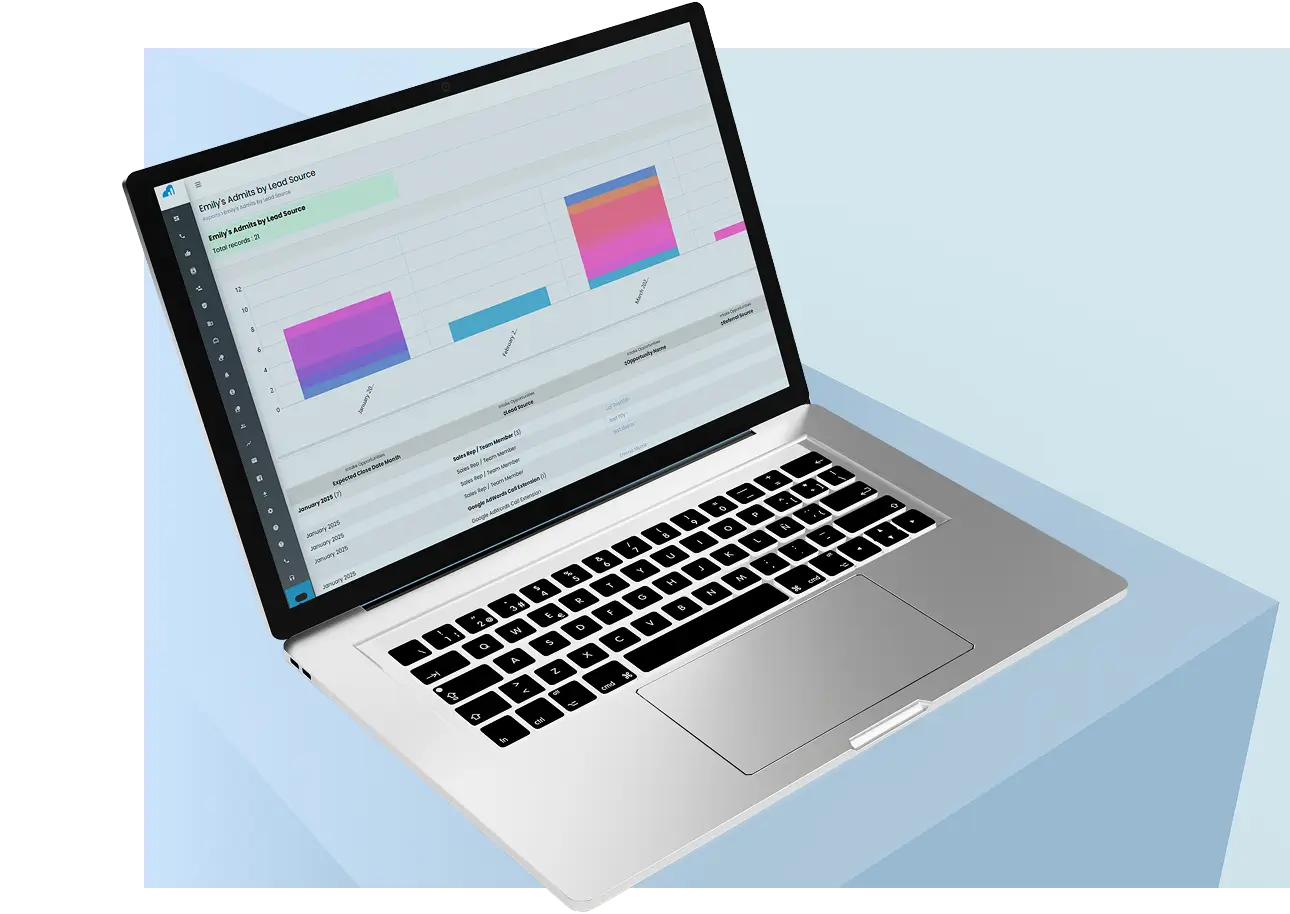
Behavioral health CRM software like Dazos centralizes admissions management, referral tracking, communications, workflow automation, and reporting in a single operational platform — giving admissions coordinators and directors real-time visibility into every stage of the intake process.
That visibility can help teams:
- Track inquiry response timelines more consistently
- Improve communication across admissions workflows
- Identify delays affecting assessment scheduling
- Monitor referral source performance more effectively
- Reduce operational friction that slows admissions momentum
- Automate referral follow-up workflows to reduce manual coordination burden
Rather than relying on disconnected spreadsheets or manual updates, behavioral health teams can better understand where delays are occurring and prioritize faster action.
The goal isn’t simply accelerating admissions volume, but creating smoother, more efficient admissions workflows that support stronger operational performance.
Using Operational Data to Improve Admissions Momentum
Behavioral health organizations already generate operational signals that can help identify where admissions momentum slows.
The challenge is knowing how to use that information effectively.
When inquiry, referral, communications, and reporting workflows are connected as with AI-powered behavioral health operations platforms like Dazos, organizations gain real-time visibility into admissions performance metrics that would otherwise require manual data pulls.
That may include:
- Inquiry-to-response timing and callback performance
- Inquiry-to-assessment cycle time by referral source
- Referral source conversion rates and partner performance trends
- Communication gaps causing drop-off in the admissions funnel
- Census management trends tied to admissions workflow efficiency
Rather than waiting for slower admissions performance to become obvious, behavioral health teams can identify patterns earlier and make faster operational decisions.
In many cases, improving admissions momentum isn’t about increasing effort. It’s about improving visibility.
Getting More Value From Existing Admissions Workflows
For many behavioral health organizations, the opportunity isn’t rebuilding admissions operations from scratch, but improving the systems and workflows already in place.
Small operational improvements can produce measurable results quickly. Pathways Recovery Centers, for example, reduced their admissions cycle from days to hours after implementing Dazos, a result driven not by more staff but by better workflow visibility and faster intake coordination.
For teams using connected systems like Dazos, greater operational visibility may help reveal opportunities to improve admissions efficiency without adding extra manual work.
The result is a more responsive admissions process that helps behavioral health organizations move prospective patients from inquiry to assessment with greater consistency.
Smarter Admissions Acceleration Starts With Better Visibility
Behavioral health organizations don’t need more admissions activity. They need greater visibility into what slows admissions momentum in the first place.
As referral volume fluctuates, staffing pressures shift, and admissions demands grow, reducing inquiry-to-assessment delays becomes increasingly important to maintaining operational efficiency.
When admissions workflows, communications, referral tracking, and reporting are easier to view in one place, behavioral health teams gain clearer visibility into what may be slowing admissions momentum.
With support from connected systems like Dazos, organizations can reduce friction, improve admissions efficiency, and respond more quickly to operational challenges.
Ready to reduce inquiry-to-assessment delays and improve admissions efficiency?
Dazos is the behavioral health admissions software built to give treatment centers, residential programs, and outpatient organizations the pipeline visibility and workflow automation they need to move faster — from first inquiry to confirmed assessment.
Explore how Dazos helps behavioral health organizations streamline admissions workflows, improve visibility, and support smarter operational decision-making.
Sources
- The National Council for Mental Wellbeing. Behavioral Health Workforce Resources. Retrieved from: https://www.thenationalcouncil.org/resources/behavioral-health-workforce-is-a-national-crisis-immediate-policy-actions-for-states/. Accessed on May 28, 2026.
- Substance Abuse and Mental Health Services Administration (SAMHSA). Behavioral Health Workforce. Retrieved from: https://www.samhsa.gov/about/careers/behavioral-health-workforce. Accessed on May 28, 2026.
- Healthcare Information and Management Systems Society (HIMSS). Analytics, AI & Data Resources. Retreived from: https://www.himss.org/resource-center/. Accessed on May 28, 2026.